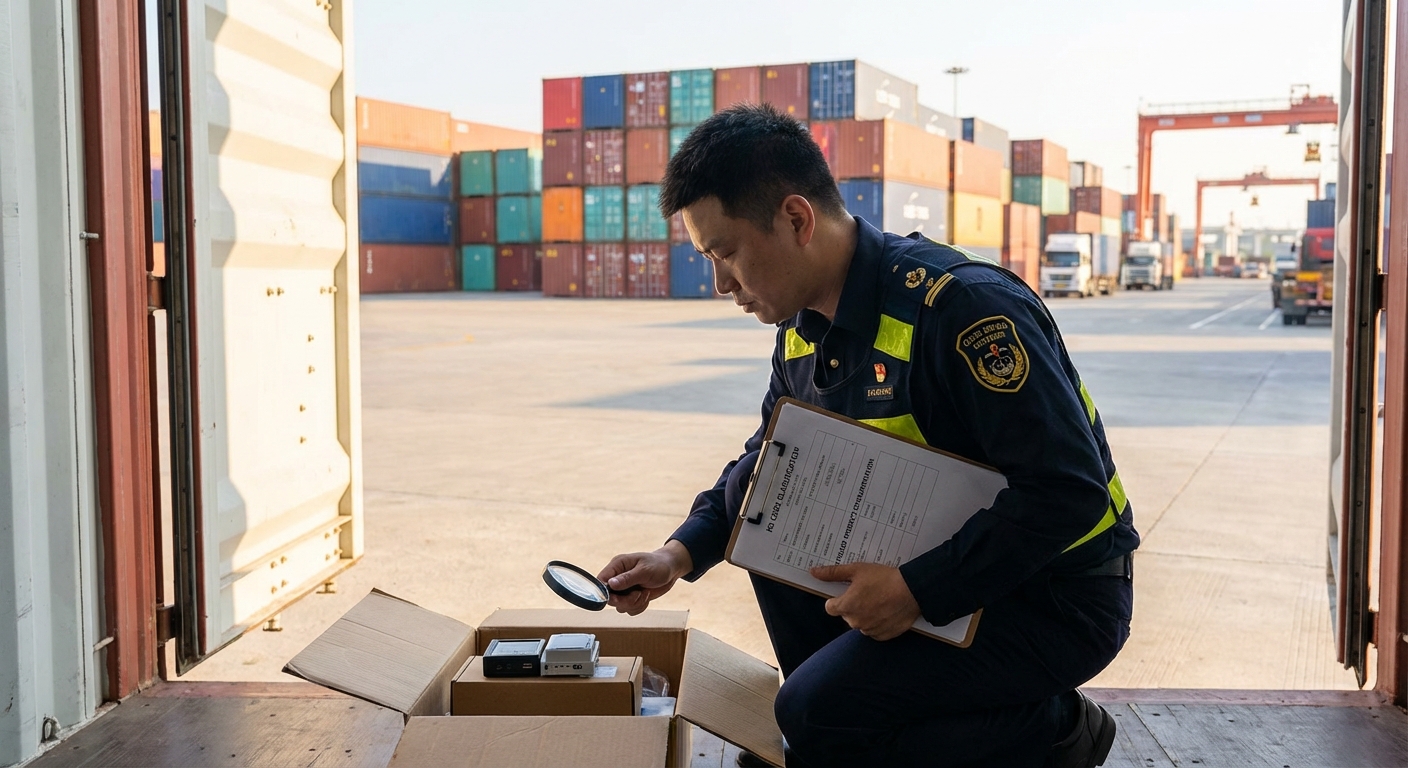
Introduction: Why Product Classification Makes or Breaks Your Trade Success
In the intricate world of international commerce, few elements carry as much weight as the seemingly simple string of numbers known as the Harmonized System code. This numerical classification system serves as the universal language that customs authorities across 200+ countries use to identify traded goods, calculate duties, enforce regulations, and track global commerce patterns.
Think of HS codes as the passport for your products—without proper identification, your goods won't cross borders smoothly. Yet despite their critical importance, misclassification remains one of the most common and costly mistakes in cross-border trade.
The stakes are substantial. An incorrectly assigned classification can trigger:
- Unexpected duty assessments running into thousands of dollars
- Cargo holds at ports costing you time and customer goodwill
- Regulatory violations leading to formal investigations
- Denied access to preferential trade agreements
- Damaged business reputation with both customers and authorities
Developed by the World Customs Organization (WCO), the Harmonized System creates a standardized six-digit foundation that every participating nation builds upon. India extends this to eight digits through its ITC-HS system, while countries like the United States and members of the European Union utilize ten-digit classifications. China has implemented a thirteen-digit system for even more granular product identification.
This comprehensive guide will transform your understanding of product classification from a compliance checkbox into a strategic advantage. Whether you're a seasoned trade professional or launching your first international shipment, you'll discover how proper classification protects your business while accelerating your global growth.
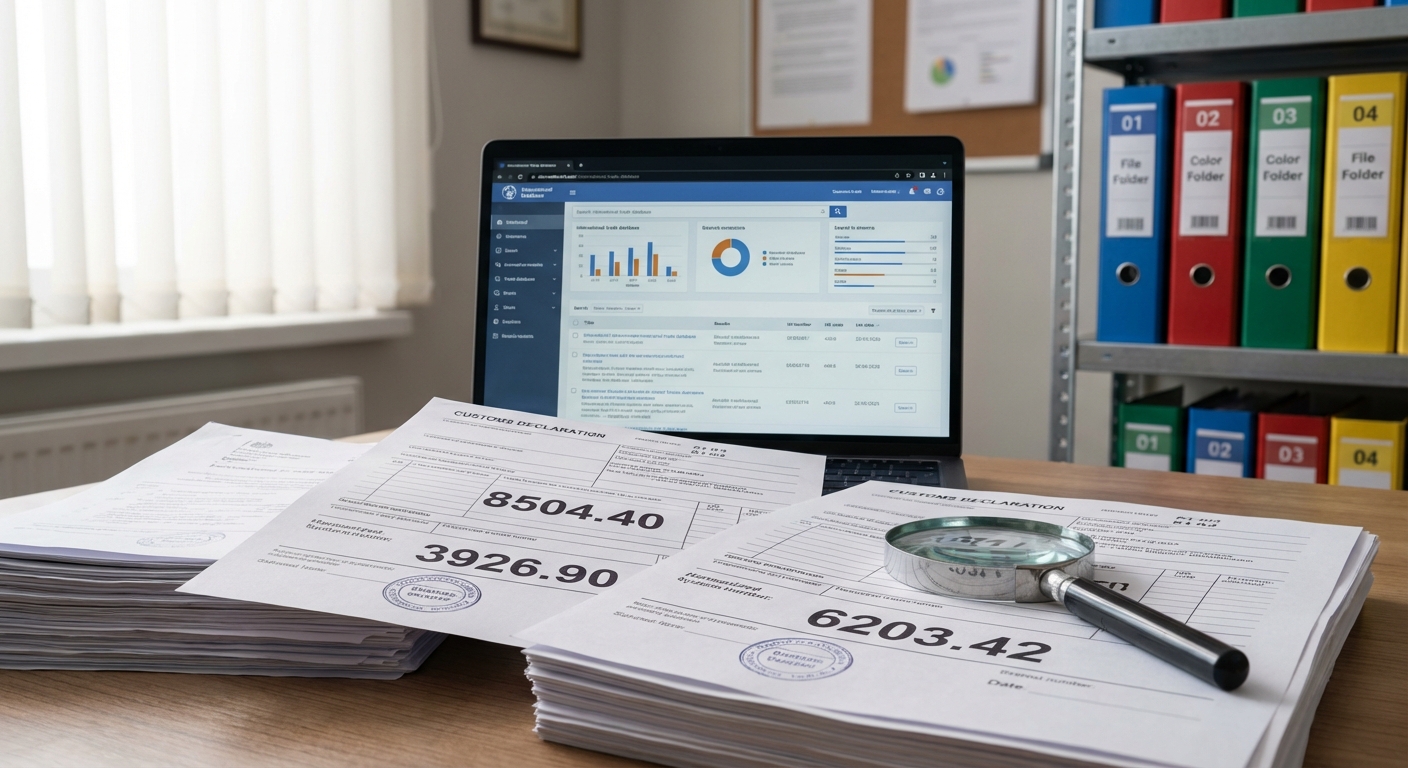
Understanding the Foundation: What Harmonized System Codes Really Represent
The Architecture of Global Trade Language
The Harmonized System functions as a hierarchical structure, moving from broad product categories to increasingly specific descriptions. The first two digits identify the chapter (there are 97 chapters covering everything from live animals to works of art). The next two digits specify the heading within that chapter, and the fifth and sixth digits provide even more detailed classification.
This six-digit foundation remains identical worldwide—a cotton shirt carries the same base classification whether it's shipped from Bangladesh, manufactured in Vietnam, or imported into Canada. This global consistency enables international trade statistics, facilitates trade negotiations, and creates predictability for businesses operating across multiple markets.
Beyond these universal six digits, each country adds its own extensions to address specific tariff rates, trade policies, and statistical requirements. Understanding both the global standard and country-specific requirements becomes essential for trade compliance.
Why Classification Demands Precision
Unlike many business processes where "close enough" might suffice, product classification operates in a binary world—classifications are either correct or incorrect, with little gray area in between. Customs authorities worldwide have invested heavily in sophisticated systems that flag inconsistencies, detect patterns of misclassification, and identify high-risk shipments.
The legal implications cannot be overstated. When you declare a classification code, you're making a formal statement to government authorities about your product's identity. This declaration determines not just the duty rate, but also:
- Whether your product requires special licenses or permits
- Which government agencies must review the shipment
- What safety or quality standards apply
- Whether preferential duty rates under trade agreements are available
- How trade statistics will record the transaction
The Cardinal Rule: Classify Products by Physical Reality, Not Marketing Language
Moving Beyond Commercial Descriptions
One of the most frequent classification errors stems from confusing how you market a product with what that product actually is from a customs perspective. Your e-commerce listing might advertise "Premium Organic Wellness Tea," but customs authorities need to know the technical reality: dried plant leaves intended for beverage preparation.
Marketing departments excel at creating appealing product names that emphasize benefits, lifestyle associations, or brand positioning. Customs classification, however, focuses exclusively on objective, physical characteristics:
Material Composition: What raw materials constitute the product? For textile items, is the fiber cotton, polyester, silk, or a blend? For metal goods, which metal predominates? For food products, what are the primary ingredients?
Manufacturing Process: How was the product made? Was it woven, knitted, forged, molded, or assembled? This often determines which chapter or heading applies.
Functional Purpose: What does the product actually do? A "smartphone stand" might be classified as plastic furniture, a plastic article, or an accessory depending on its construction and intended use.
Stage of Completion: Is this a finished consumer product, a semi-finished industrial component, or raw material? The same chemical compound might be classified differently based on its processing stage.
Practical Application Example
Consider a product marketed as "Artisan Coffee Brewing System." This commercial description tells customs authorities nothing useful. The classification-appropriate description would be:
"Electric coffee maker, household type, with integrated grinder mechanism, constructed primarily of stainless steel housing with plastic components, capacity 1.5 liters, operates on 220-240V AC power"
This description provides customs with the information needed to classify the product accurately: it's an electrical appliance, specifically for coffee preparation, with particular materials and specifications that might affect its classification within the relevant chapter.

Navigating the Global-Local Dynamic in Classification Systems
The Six-Digit Universal Foundation
When engaging in international contracts, quotations, and initial buyer communications, always reference the six-digit HS code. This creates clarity regardless of which country your buyer operates from. Both parties understand the product category without getting tangled in country-specific extensions that may be unfamiliar.
For instance, if you're exporting leather footwear, the base code 640359 (footwear with outer soles of rubber/plastics/leather, covering the ankle but not the calf) communicates clearly to buyers worldwide. This approach prevents confusion and establishes a common reference point.
Country-Specific Extensions Matter for Compliance
Once you move from commercial negotiation to actual shipping documentation and customs clearance, country-specific codes become mandatory. Each importing country requires its full classification system for:
- Accurate duty calculation using their specific tariff schedule
- Application of trade agreement preferences
- Compliance with country-specific regulations
- Generation of national trade statistics
Example Comparison for Ceramic Tableware:
Global Base (HS 6-digit): 691110 - Tableware and kitchenware, of porcelain or china
India (ITC-HS 8-digit): 69111010 - Tableware of porcelain or china, excluding hotel ware
United States (HTSUS 10-digit): 6911.10.5200 - Tableware (excluding plates, cups, saucers, soup bowls), of porcelain or china, valued over $8 but not over $29 per dozen
European Union (CN 10-digit): 6911.10.0019 - Tableware and kitchenware of porcelain or china (excluding coffee and tea services)
Notice how the specificity increases with country extensions, addressing unique tariff structures and regulatory requirements in each market.
Critical Mistakes That Undermine Classification Accuracy
The Dangerous Practice of Code Copying
In the pressure-filled environment of export deadlines and documentation requirements, a tempting shortcut emerges: copying classification codes from readily available sources without verification. This practice creates significant vulnerability.
Why These Sources Prove Unreliable:
Previous Shipments: Product specifications evolve. The cotton-polyester blend ratio that worked last year might have changed. The manufacturer might have substituted materials. Your previous classification may have been wrong from the start.
Industry Peers: Your competitor shipping similar products might be misclassifying them—possibly without having faced consequences yet. Their code might reflect their specific product variant that differs from yours in classification-relevant ways.
Logistics Service Providers: Freight forwarders and customs brokers provide valuable services, but they rarely have detailed knowledge of your product's manufacturing process, exact material composition, or technical specifications. They make educated guesses based on your limited product description.
Generic Internet Searches: Online databases and commercial classification tools often contain outdated information, reflect simplified assumptions, or show classifications from different countries' systems that don't apply to your specific trade lane.
Supplier Invoices: If you're a reseller or distributor, your supplier's classification might reflect their domestic market or their typical export destinations, not necessarily the correct code for your specific import country.
The Compounding Consequences
When you copy an incorrect classification, you don't just make one mistake—you potentially embed that error across all future shipments, multiply it across product variants, and create a pattern that customs risk assessment systems will eventually flag. The longer an incorrect classification persists, the larger the potential liability becomes.

The Non-Negotiable Requirement: Documentation Consistency
Why Harmonization Across Documents Matters
Modern customs clearance operates through interconnected digital systems that automatically compare data across multiple documents. These systems excel at identifying discrepancies. When your commercial invoice shows one HS code, your packing list references another, and your shipping bill declares a third, automated risk-assessment algorithms immediately flag your shipment for physical examination.
Documents Requiring Classification Consistency:
- Commercial Invoice: The primary document showing what was sold
- Packing List: Details of how goods are packaged and described
- Shipping Bill/Export Declaration: Official declaration to exporting country customs
- Customs Import Declaration: Official declaration to importing country customs
- Certificate of Origin: Establishes product's country of origin for preferential treatment
- Letter of Credit: Banking document that must match all other documentation
- Marine Insurance Certificate: Describes cargo for insurance purposes
- Pre-shipment Inspection Certificates: Third-party verification of goods
The Document Description Connection
Beyond merely matching HS codes, the product descriptions across all documents must support the declared classification. A mismatch between description and code creates just as many problems as inconsistent codes.
If you classify goods under 940360 (wooden furniture for offices), but your invoice describes them as "decorative wall-mounted wooden shelving units," customs will question whether the classification accurately reflects the product. Wall-mounted shelving might fall under different headings depending on design and intended use.
Consistency in both code and description demonstrates professional trade practices, reduces examination risk, and accelerates clearance times.
Understanding and Managing Classification Risk
The Cascading Impact of Incorrect Codes
Classification errors don't merely create administrative inconveniences—they trigger a chain of consequences that can significantly impact your business operations and financial position.
Immediate Operational Impacts:
Physical cargo examination becomes likely when classification issues are detected. This means your container gets pulled from the normal clearance flow, moved to an examination bay, and subjected to detailed inspection. Days or weeks can pass during this process, delaying delivery to your customer and potentially causing them to cancel orders or refuse future business.
Financial Consequences:
Duty underpayment resulting from incorrect classification creates liability for the unpaid duties plus interest calculated from the date of import. Many countries also assess penalties ranging from 25% to 500% of the duty shortfall, depending on whether authorities view the error as negligent or intentional.
Even when seeking refunds for overpaid duties due to incorrect classification, you face time-consuming administrative processes, often with strict filing deadlines. Many businesses never recover overpaid duties simply because the refund process requires resources they cannot spare.
Regulatory and Legal Risks:
Repeated classification errors, especially those that consistently result in lower duty payments, can trigger formal investigations. Customs authorities may issue show-cause notices requiring you to explain why penalties shouldn't be imposed. In serious cases, criminal prosecution for customs fraud becomes possible.
Reputational Damage:
Perhaps most damaging in the long term, classification problems erode your credibility with customs authorities. Once flagged as high-risk, your shipments face increased scrutiny indefinitely. This "red channel" status means every future shipment gets examined, dramatically increasing your logistics costs and delivery times.
Mitigating Classification Risk
Forward-thinking businesses treat classification as a core competency rather than an administrative task. This means:
- Investing in classification training for trade compliance staff
- Establishing internal review processes before first shipment of new products
- Maintaining detailed technical documentation supporting classification decisions
- Periodically auditing classifications, especially for high-volume or high-value products
- Seeking advance rulings from customs authorities for complex products

Building Your Classification Validation Process
The Systematic Approach to Accurate Classification
Rather than treating each classification as a one-time decision, develop a systematic process that ensures accuracy and creates documentation supporting your decisions.
Step 1: Comprehensive Product Analysis
Create a detailed product specification sheet covering:
- Complete material composition with percentages for blended products
- Manufacturing processes and techniques employed
- Dimensions, weight, and physical characteristics
- Intended end-use and application
- Technical specifications and performance characteristics
- Component breakdown for assembled products
Step 2: Research and Preliminary Classification
Using official government tariff databases, research the relevant chapter and headings. Don't stop at the first plausible classification—identify all potentially applicable headings and understand why each might or might not apply.
Step 3: Apply General Interpretative Rules
The Harmonized System includes six General Interpretative Rules (GIRs) that provide the framework for resolving classification questions:
- GIR 1: Classification determined by heading and chapter notes
- GIR 2: Rules for incomplete or unassembled goods
- GIR 3: Framework for goods potentially classifiable under multiple headings
- GIR 4: Goods not covered by specific provisions
- GIR 5: Classification of containers and packing materials
- GIR 6: Application of subheading comparability
Understanding these rules helps resolve classification ambiguities systematically rather than through guesswork.
Step 4: Draft Classification-Appropriate Descriptions
Write product descriptions specifically for customs purposes. This description should:
- Lead with the most classification-relevant information
- Use technical terminology from the tariff schedule when applicable
- Quantify material compositions, dimensions, and specifications
- Avoid marketing language, brand names, and subjective descriptors
- Be specific enough to support the chosen classification
Step 5: Cross-Reference and Validate
Check your proposed classification against:
- Customs rulings for similar products
- Chapter and heading notes in the tariff schedule
- Explanatory notes from the World Customs Organization
- Country-specific guidance documents
Step 6: Document Your Decision Process
Create a classification rationale document that explains:
- Why you chose this classification
- What alternative classifications you considered and rejected
- Which General Interpretative Rules you applied
- Supporting technical documentation
- Date of classification decision and person responsible
This documentation becomes invaluable if customs authorities later question your classification.
Essential Principle: Descriptions Drive Classifications, Not the Reverse
Why Description Comes First
A fundamental misunderstanding plagues many trade professionals: the belief that once you determine an HS code, the description doesn't matter much. The reality works exactly opposite.
Customs authorities examine your product description first. They evaluate whether that description logically supports the declared classification code. A precise, technically accurate description essentially defends your classification decision, while vague or marketing-focused descriptions raise immediate questions.
Weak Description Example:
"Fashion accessories for modern lifestyle"
- What are they? Clothing? Jewelry? Bags?
- What material? Metal? Plastic? Textile?
- What specific items? Belts? Scarves? Watches?
This description provides no basis for validating any HS code. Customs cannot determine if the declared classification makes sense.
Strong Description Example:
"Women's leather handbags with outer surface of genuine cowhide leather, with textile lining, featuring zippered closure, single shoulder strap, dimensions approximately 30cm x 25cm x 10cm"
This description immediately narrows the classification possibilities. Customs officers can quickly verify whether the declared code for leather handbags matches the described product.
The Description Standard for Customs Clearance
Your product descriptions should answer the questions customs officers need answered to validate classification:
Material Question: What is it made from? Be specific—not just "metal" but "stainless steel" or "aluminum alloy." For textiles, specify fiber content and whether knitted or woven.
Function Question: What does it do? Not the marketing benefit, but the actual function. A "wellness device" means nothing; "electric heating pad for therapeutic purposes" provides clarity.
Construction Question: How is it made or assembled? Is it a single molded piece or assembled from components? This often determines classification.
Specifications Question: What are the relevant technical details? Voltage for electrical items, capacity for containers, dimensions for furniture, concentration for chemicals.
Rewriting Descriptions for Customs
Take each product in your export catalog and create two descriptions:
- Marketing Description: The appealing language you use for selling
- Customs Description: The technical language that supports classification
Maintain both. Use the marketing description for commercial communications and the customs description for all trade documentation.
Authoritative Resources for Classification Verification in India
Official Government Platforms
Relying on authentic, government-operated resources eliminates the risk of outdated or incorrect information from commercial sources. For Indian exporters and importers, several official platforms provide classification guidance.
Directorate General of Foreign Trade (DGFT) ITC-HS Database
The DGFT maintains the authoritative ITC-HS classification database for India. This resource provides the official eight-digit codes required for all Indian export and import documentation, along with associated policy conditions, restrictions, and licensing requirements.
Central Board of Indirect Taxes and Customs (CBIC)
The CBIC portal offers access to the Indian Customs Tariff, including duty rates, exemptions, and classification rulings. This resource helps verify that your classification aligns with current customs requirements and identifies applicable duty rates.
World Customs Organization Resources
The WCO provides explanatory notes and classification opinions that help interpret the Harmonized System. While these don't replace country-specific requirements, they offer authoritative guidance on how products should be classified under the international framework.
Key Takeaway: Always verify classifications using official government sources before finalizing trade documentation. Commercial databases and third-party tools should supplement, not replace, official resources.
Conclusion: Classification as Competitive Advantage
Mastering product classification transforms what many businesses view as a compliance burden into a genuine competitive advantage. Accurate classification ensures predictable duty costs, enables access to preferential trade agreements, accelerates customs clearance, and builds credibility with authorities worldwide.
The investment in developing robust classification processes pays dividends across every international shipment. By understanding the Harmonized System's structure, maintaining documentation consistency, avoiding common pitfalls, and leveraging official resources, you position your business for sustainable success in global trade.
Remember: in international commerce, precision in classification isn't just about compliance—it's about building the foundation for efficient, profitable, and scalable global operations.