Introduction: The New Reality of Conflict-Driven Trade Disruptions
The landscape of international commerce has never been more volatile. As of March 2026, ongoing military confrontations in critical regions continue to reshape the fundamentals of cross-border trade. For Indian export businesses, these geopolitical tensions represent more than distant news headlines—they translate into tangible operational challenges that demand immediate strategic responses.
The interconnected nature of global supply chains means that regional conflicts create ripple effects across continents. When warfare erupts in strategically important areas, the immediate consequences extend to shipping lanes, insurance premiums, payment mechanisms, and contractual obligations. Indian exporters, who have worked diligently to establish international market presence, now face unprecedented complexity in fulfilling their commercial commitments.
This comprehensive guide addresses the critical vulnerabilities that emerge during periods of armed conflict. Whether your merchandise is currently traversing international waters or you're evaluating new purchase orders, understanding the risk landscape is no longer optional—it's essential for business survival and continuity.
The following sections outline actionable frameworks for protecting your commercial interests, maintaining customer relationships, and ensuring financial security when traditional trade assumptions no longer hold true.
Understanding the Conflict-Trade Nexus: Why Wars Disrupt Commerce
The Four Pillars of Trade Vulnerability
Armed conflicts fundamentally destabilize four core elements that underpin successful international trade transactions:
Transportation Infrastructure and Routes
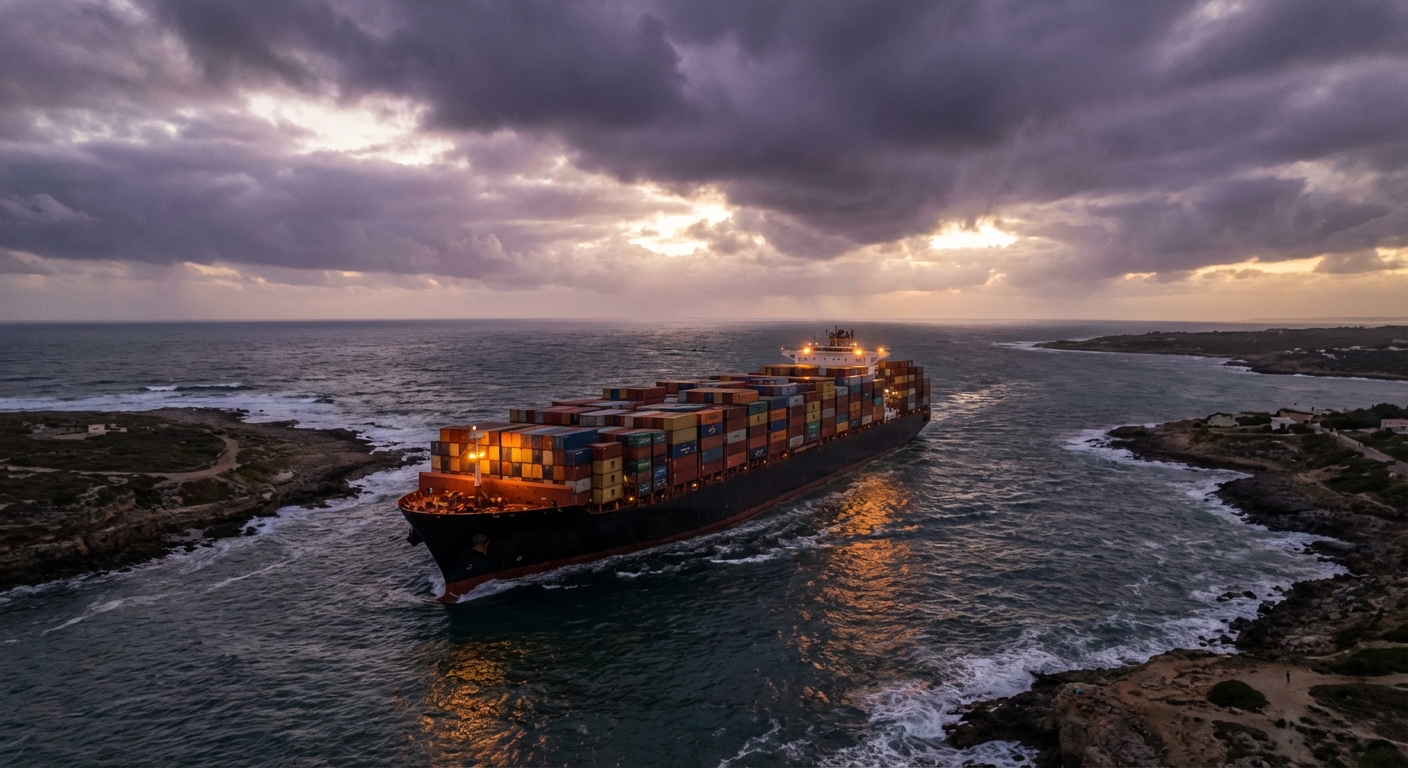
Military operations frequently target or restrict maritime corridors, airspace, and land transportation networks. Shipping routes that were reliable yesterday become high-risk zones overnight. Container vessels may face detention, rerouting, or even direct threats in conflict-adjacent waters.
Insurance Coverage and Premium Structures
War risk insurance operates under entirely different parameters than standard marine cargo insurance. Premiums can multiply exponentially when vessels enter designated war zones, and some insurers may exclude coverage altogether for specific regions or circumstances.
Financial Settlement Mechanisms
International banking sanctions, payment freezes, and currency volatility often accompany major conflicts. Letters of credit may become unenforceable, SWIFT transactions could face delays or blocks, and receiving payments from buyers in affected regions becomes increasingly problematic.
Contractual Performance and Force Majeure
Delivery timelines, quality maintenance, and contractual obligations face enormous challenges during warfare. The legal concept of force majeure—circumstances beyond reasonable control—becomes highly relevant, yet its interpretation varies significantly across jurisdictions and contracts.

The Compounding Effect of Regional Instability
Unlike isolated business challenges, conflict-related disruptions create cascading problems. A simple delay in vessel movement can trigger insurance complications, which then affect payment terms, ultimately jeopardizing customer relationships and future orders. This interconnected vulnerability requires exporters to think systemically rather than addressing individual problems in isolation.
Critical Scenario One: Managing Goods Already in Transit
The Heightened Risk Window
When your merchandise has departed Indian ports but hasn't reached its final destination, you enter the most precarious phase of international trade during conflict periods. Your goods are physically beyond your control, vulnerable to multiple threat vectors, and represent committed financial resources.
Essential Protective Actions for In-Transit Cargo
Immediate Insurance Verification and Enhancement
Your first responsibility involves confirming the adequacy of your current insurance coverage. Standard marine insurance policies frequently contain war exclusion clauses that render them ineffective during armed conflicts.
- Contact your insurance provider immediately to verify whether your current policy covers war-related risks
- Request explicit written confirmation regarding coverage applicability to current conflict zones
- Understand the geographical boundaries of your coverage—insurance may be valid until goods reach certain coordinates but become void beyond specific maritime zones
- Consider purchasing supplementary war risk insurance, even if premiums seem excessive
- Document all communications with insurers for future reference and potential claims
Continuous Cargo Tracking and Route Monitoring
Technology has transformed cargo visibility, and during conflicts, real-time tracking becomes invaluable for decision-making.
- Implement GPS-based container tracking systems if not already deployed
- Establish daily check-ins with your freight forwarder or shipping line
- Monitor international shipping alerts and maritime security bulletins
- Identify potential alternative routes should your current shipping path become untenable
- Maintain direct communication channels with the vessel's agent or master
Proactive Buyer Communication and Expectation Management
Transparency with your customer isn't merely ethical—it's strategically essential for preserving long-term commercial relationships.
- Inform buyers immediately about potential delays or risks affecting their shipment
- Provide evidence-based updates rather than speculative information
- Discuss potential alternative delivery arrangements or partial shipments
- Document all communications to establish a clear timeline of good-faith efforts
- Propose contingency plans that demonstrate your commitment to fulfilling obligations

Legal Documentation and Force Majeure Preparation
The legal dimension of conflict-affected shipments requires meticulous attention to detail and documentation.
- Review your sales contract for force majeure clauses and their specific wording
- Collect evidence documenting the conflict's direct impact on your shipment
- Obtain official statements from shipping lines, port authorities, or government agencies confirming disruptions
- Consult with international trade attorneys regarding your rights and obligations
- Prepare formal force majeure notifications if circumstances warrant their invocation
Financial Safeguards for In-Transit Merchandise
Payment Security Mechanisms
The financial aspects of in-transit goods during conflicts deserve special attention to prevent total loss scenarios.
- If operating on letter of credit terms, immediately contact the issuing bank to discuss document presentation deadlines and potential amendments
- For documents against payment arrangements, prepare for possible delays in the negotiation process
- Consider whether partial shipment provisions in your contract allow for splitting deliveries and payments
- Maintain comprehensive photographic and documentary evidence of goods' condition at departure
- Explore export credit guarantee programs that might offer additional protection
Currency and Transaction Risk Management
Conflicts often trigger currency volatility and banking disruptions that compound your commercial risks.
- Monitor exchange rate fluctuations that might affect your realized proceeds
- Verify that payment routing through intermediary banks remains viable given current sanctions regimes
- Establish alternative payment channels if primary banking relationships face disruption
- Consider whether currency hedging instruments might protect against adverse movements
- Maintain working capital reserves to absorb potential payment delays
Critical Scenario Two: Evaluating and Managing Pending Purchase Orders
The Decision Framework for New Commitments
Purchase orders awaiting acceptance or execution present different challenges than in-transit cargo. Here, you retain the power of decision-making before committing resources, but face pressure from customer relationships and competitive considerations.
Comprehensive Risk Assessment Protocol
Destination Country Analysis
Before accepting any new order, conduct rigorous due diligence on the buyer's location and surrounding regional stability.
- Evaluate whether the buyer's country is directly involved in the conflict or situated in adjacent regions
- Research governmental stability and the likelihood of expanded hostilities
- Assess whether the destination port remains operational and accessible
- Investigate whether international sanctions affect your ability to legally ship to that location
- Consider the broader political relationships between India and the destination country

Shipping Route Viability Evaluation
The path your goods must travel matters as much as the destination itself.
- Map the complete shipping route, identifying any segments passing through or near conflict zones
- Consult with multiple freight forwarders to understand their willingness to handle the shipment
- Investigate whether shipping lines have suspended or modified services to affected regions
- Calculate the probability of significant rerouting and associated cost implications
- Determine whether alternative transportation modes (air freight, land routes) offer viable substitutes
Insurance Availability and Cost Analysis
Insurance feasibility often becomes the determining factor in whether an order can proceed profitably.
- Obtain quotations for war risk insurance from multiple providers
- Compare total insurance costs against your profit margins to ensure commercial viability
- Understand the specific exclusions and limitations in proposed war risk policies
- Verify whether your buyer's insurance requirements can be satisfied under current market conditions
- Calculate the break-even point where insurance costs make the transaction unprofitable
Payment Terms and Financial Security
The payment structure becomes exponentially more important during conflict periods.
- Insist on more secure payment terms than you might normally require—preferably confirmed letters of credit from reputable international banks
- Consider requesting advance payments or deposits to offset increased risk exposure
- Evaluate the creditworthiness of the buyer and their country's banking system
- Investigate whether export credit insurance remains available for the destination
- Build risk premiums into your pricing to account for heightened exposure
Strategic Decision Matrix for Order Acceptance
Proceed with Enhanced Precautions
Accept the order only after implementing comprehensive risk mitigation measures:
- Confirmed letter of credit from a highly-rated international bank
- Comprehensive war risk insurance coverage secured before production begins
- Clear force majeure provisions negotiated into the sales contract
- Buyer's written acknowledgment of potential delays and disruptions
- Higher profit margins that justify the elevated risk profile
Propose Modified Terms
Counter the original purchase order with revised conditions that reduce your exposure:
- Shorter validity periods for price quotations and delivery commitments
- Shared responsibility for additional insurance and freight costs
- Flexible delivery timelines with explicit accommodation for conflict-related delays
- Alternative delivery locations in safer neighboring countries
- Partial shipment structures that limit single-shipment exposure
Decline the Order Professionally
Sometimes the most prudent decision involves walking away from business that presents unacceptable risk.
- Communicate your decision promptly and professionally to preserve future relationships
- Provide clear, honest reasoning without detailed exposition of your risk calculations
- Offer to revisit the opportunity when circumstances stabilize
- Suggest alternative products or timing that might work within acceptable risk parameters
- Maintain the relationship through other means despite declining the immediate transaction
Operational Best Practices During Extended Conflict Periods
Building Organizational Resilience
Establish a Conflict Response Team
Designate specific individuals responsible for monitoring geopolitical developments and implementing protective protocols.
- Assign primary responsibility to someone with international trade expertise
- Create backup decision-makers to ensure continuity during absences
- Develop clear escalation procedures for emerging situations
- Schedule regular team meetings to review ongoing situations and adjust strategies
- Document all decisions and rationales for future reference and learning
Develop Information Intelligence Systems
Information advantage translates directly into competitive advantage during turbulent periods.
- Subscribe to specialized maritime security services providing real-time threat assessments
- Monitor governmental advisory services from the Directorate General of Foreign Trade and Ministry of External Affairs
- Participate in industry associations where members share ground-level intelligence
- Establish relationships with customs brokers and freight forwarders who possess regional expertise
- Create a curated information dashboard that consolidates critical data sources

Maintain Enhanced Documentation Standards
Meticulous record-keeping becomes crucial for insurance claims, legal proceedings, and customer disputes.
- Photograph and video-document goods at every stage from production through loading
- Retain all communications with buyers, insurers, freight forwarders, and banking partners
- Collect and preserve official statements from governmental and commercial entities
- Create chronological timelines of events affecting each shipment
- Store documentation in multiple formats and locations to prevent loss
Financial Management During Uncertainty
Liquidity Preservation Strategies
Conflicts create cash flow challenges that can threaten otherwise healthy businesses.
- Maintain higher working capital reserves than normal operating conditions require
- Reduce receivables cycles by negotiating faster payment terms
- Consider factoring or discounting receivables to accelerate cash conversion
- Limit new capital expenditures during peak uncertainty periods
- Establish or expand banking credit facilities before you urgently need them
Diversification as Risk Mitigation
Concentration in any single market or region amplifies vulnerability during conflicts.
- Accelerate efforts to develop customer relationships in stable, peaceful regions
- Balance your export portfolio across multiple geographic markets
- Consider whether domestic market expansion might offset international challenges
- Diversify product offerings to reduce dependence on any single commodity or category
- Build relationships with multiple freight forwarders and shipping lines
Customer Relationship Management Under Stress
Communication Excellence During Crises
How you communicate during challenging periods often determines whether business relationships survive and thrive post-conflict.
Transparency and Honesty
- Share challenges openly rather than concealing problems until they become crises
- Provide realistic assessments instead of overly optimistic projections
- Acknowledge uncertainties rather than making commitments you cannot guarantee
- Differentiate between issues within your control and external force majeure circumstances
Solution-Oriented Dialogue
- Present multiple options rather than simply reporting problems
- Demonstrate your commitment to fulfilling obligations despite obstacles
- Invite buyers into collaborative problem-solving processes
- Show flexibility and creativity in developing alternative approaches
- Document proposed solutions and buyer responses
Consistent and Frequent Updates
- Establish regular communication schedules so buyers know when to expect updates
- Provide information even when situations remain unchanged—silence creates anxiety
- Use multiple communication channels to ensure message receipt
- Maintain professional tone and format regardless of stress levels
- Create templates for common update scenarios to ensure consistency
Building Long-Term Trust Capital
Businesses that handle conflict-period challenges with professionalism and integrity often emerge with stronger customer relationships than existed previously.
- View current challenges as opportunities to demonstrate your reliability and character
- Go beyond contractual minimums where possible to show commitment
- Remember that today's buyer may become tomorrow's strategic partner or reference
- Consider modest financial sacrifices that preserve valuable long-term relationships
- Document your exceptional efforts to create positive narratives for future marketing
Legal and Contractual Considerations
Force Majeure: Understanding and Application
The legal doctrine of force majeure provides potential relief from contractual obligations during extraordinary circumstances, but its application requires careful navigation.
Essential Elements of Valid Force Majeure Claims
- The event must truly be beyond reasonable control and unforeseeable
- Your contract must contain force majeure provisions or operate under legal systems recognizing the doctrine
- You must provide timely notice to the other party as specified in contractual terms
- The force majeure event must directly prevent performance, not merely make it more difficult or expensive
- You must demonstrate reasonable efforts to mitigate impacts and find alternative solutions
Documentation Requirements
- Collect governmental declarations or official statements confirming the conflict and its impacts
- Obtain certificates from shipping lines, port authorities, or insurers confirming disruptions
- Maintain detailed chronologies showing the causal connection between conflict events and performance failures
- Preserve all communications demonstrating your good-faith efforts to fulfill obligations
- Consult qualified legal counsel before formally invoking force majeure provisions
Contract Review and Amendment
Existing contracts may require modifications to reflect new realities, while new agreements should incorporate enhanced protective provisions.
Recommended Contract Enhancements
- Explicit war risk clauses defining responsibilities and remedies
- Flexible delivery timelines with extensions for specified force majeure events
- Clear allocation of additional insurance and freight costs
- Specific geographic definitions of covered and excluded territories
- Dispute resolution mechanisms appropriate for international conflicts
Government Resources and Support Systems
Indian Government Support Mechanisms
The Government of India provides various resources to support exporters facing extraordinary challenges.
Export Credit Guarantee Corporation (ECGC)
- Offers specialized insurance products covering political risks and war-related losses
- Provides guidance on country risk assessments and exposure management
- Can facilitate claims processing for covered losses
- Maintains updated risk ratings for international markets
Directorate General of Foreign Trade (DGFT)
- Issues official advisories regarding trade with affected regions
- May provide force majeure certificates validating extraordinary circumstances
- Offers guidance on export obligations and fulfillment requirements during crises
- Administers various export promotion schemes that might offset losses
Ministry of External Affairs
- Provides country-specific travel and business advisories
- Can facilitate diplomatic assistance for exporters facing challenges abroad
- Offers consular support for businesses with personnel or assets in affected regions
Industry Associations and Export Promotion Councils
- Share collective intelligence and best practices among members
- May negotiate group insurance rates or shipping solutions
- Provide platforms for discussing common challenges and solutions
- Can advocate collectively with government authorities on industry needs
Technology and Tools for Risk Management
Digital Solutions for Enhanced Visibility
Modern technology platforms offer unprecedented capability to monitor, manage, and mitigate conflict-related trade risks.
Supply Chain Visibility Platforms
- Real-time cargo tracking systems providing GPS-level precision
- Integrated dashboards consolidating shipping, insurance, and payment data
- Automated alert systems flagging route deviations or delays
- Blockchain-based documentation platforms ensuring tamper-proof records
Risk Intelligence Services
- Subscription-based geopolitical risk assessment platforms
- Maritime security services providing route-specific threat analysis
- Automated news aggregation focusing on trade-relevant developments
- Predictive analytics identifying emerging risk patterns
Communication and Collaboration Tools
- Secure messaging platforms for confidential commercial discussions
- Cloud-based document sharing ensuring all parties access current information
- Video conferencing reducing travel requirements to unstable regions
- Project management tools coordinating responses across teams and organizations
Conclusion: Thriving Through Uncertainty
Global conflicts represent formidable challenges for international trade, but they need not spell disaster for well-prepared exporters. The strategies outlined in this guide provide a framework for navigating these turbulent periods while protecting both immediate transactions and long-term commercial relationships.
The exporters who emerge successfully from conflict periods share common characteristics: they maintain exceptional situational awareness, implement rigorous risk assessment protocols, communicate transparently with all stakeholders, and balance prudent caution with strategic courage.
For goods already in transit, immediate action to verify insurance coverage, maintain cargo visibility, and manage customer expectations can mean the difference between successful delivery and catastrophic loss. For pending purchase orders, systematic evaluation of destination stability, shipping routes, insurance availability, and payment security enables informed decisions about whether, when, and under what terms to proceed.
Remember that international trade has weathered countless storms throughout history. The businesses that survive and thrive are those that adapt quickly, plan meticulously, and maintain unwavering commitment to their commercial relationships even during the most challenging circumstances. Your preparedness today determines your success tomorrow.