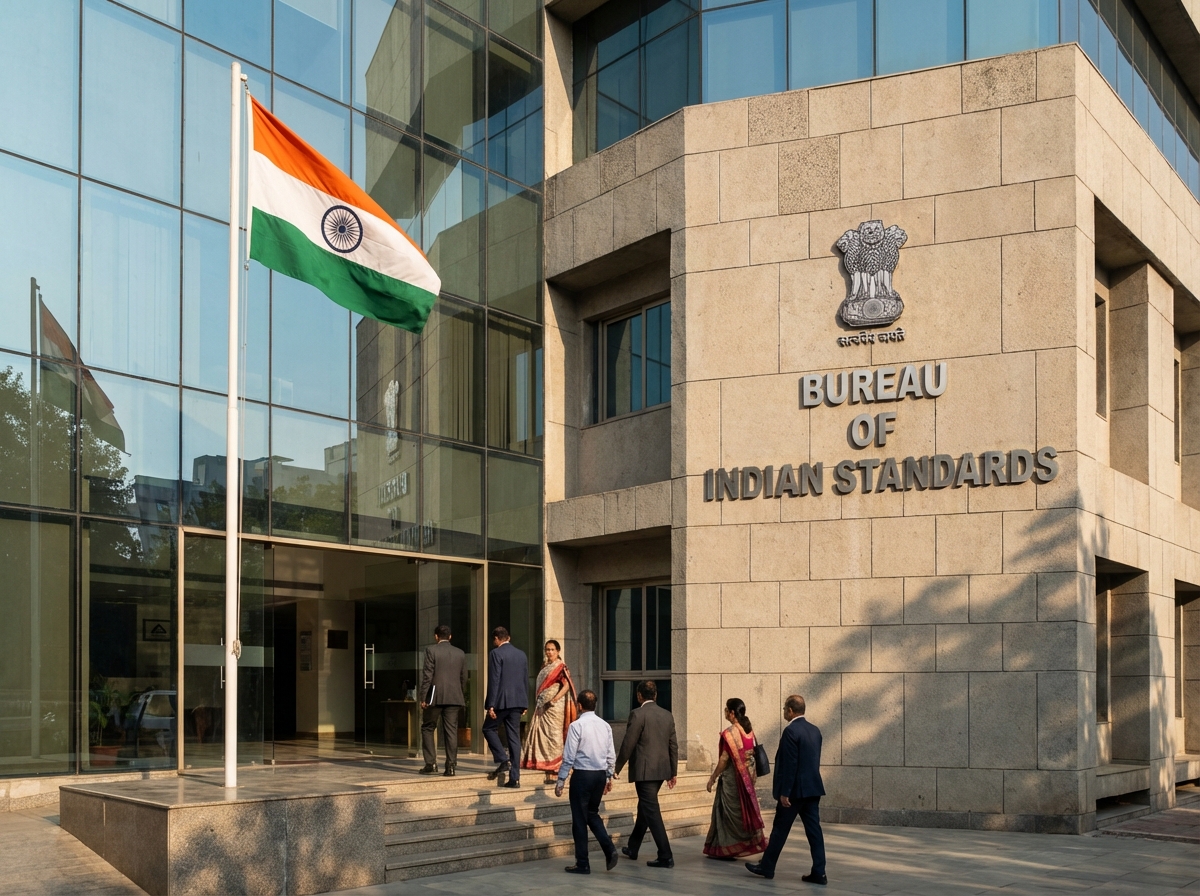
Introduction: Navigating India's Quality Standards Framework
India's rapidly expanding economy presents tremendous opportunities for global traders, but success in this market requires understanding the country's regulatory landscape. At the heart of product compliance lies the Bureau of Indian Standards—a governmental body that acts as the gatekeeper for quality and safety across thousands of product categories.
If you're planning to export goods to India or import products for distribution within the Indian market, understanding BIS requirements isn't optional—it's fundamental to your business operations. This comprehensive guide will walk you through everything you need to know about BIS certification, from its basic framework to practical implementation strategies.
Whether you're a seasoned international trader or exploring Indian markets for the first time, this guide will help you navigate the complexities of BIS compliance and avoid costly delays at customs checkpoints.
What Exactly is the Bureau of Indian Standards?
The Bureau of Indian Standards represents India's apex standardization body, operating under the authority of the Department of Consumer Affairs within the Ministry of Consumer Affairs, Food & Public Distribution. Think of it as India's equivalent to organizations like the ISO (International Organization for Standardization) or similar national standards bodies in other countries.
Established through parliamentary legislation, BIS serves as the authoritative voice on product quality, safety specifications, and standardization practices throughout India. The organization develops technical standards, operates certification schemes, and enforces compliance mechanisms to protect consumers while facilitating legitimate trade.
The Core Mandate
BIS operates with several interconnected objectives:
Standard Development: Creating comprehensive technical specifications that define quality parameters, safety requirements, and performance benchmarks for diverse product categories.
Certification Services: Administering schemes that verify products meet established standards through rigorous testing and ongoing surveillance.
Consumer Protection: Ensuring that goods available in the Indian marketplace don't pose health risks, safety hazards, or environmental threats to users.
Trade Facilitation: Providing a transparent, predictable regulatory framework that enables both domestic manufacturers and international exporters to operate with clarity.
The organization doesn't simply impose restrictions—it creates a level playing field where quality-conscious manufacturers can differentiate themselves while protecting consumers from substandard products.

Why India Established This Standards Body
Understanding BIS's purpose helps contextualize its requirements. India's consumer market encompasses over 1.4 billion people with varying levels of technical literacy and consumer awareness. Unlike markets where consumers might independently verify product specifications, many Indian consumers rely on governmental certification as their primary quality assurance mechanism.
Historical Context
India's journey toward standardization began decades ago when the country recognized that economic development required consistent quality frameworks. The BIS Act consolidated earlier standards institutions, creating a unified body with legal authority to mandate compliance for specific product categories.
This evolution reflects India's transition from a developing economy to a major global market. As international trade expanded, the need for standards compatible with global practices while addressing India-specific concerns became paramount.
The Triple Objectives
BIS balances three sometimes competing goals:
- Protecting Domestic Consumers: Preventing dangerous or substandard products from entering Indian homes
- Supporting Local Manufacturing: Helping Indian producers meet quality benchmarks that enable competitive positioning
- Facilitating International Commerce: Creating certification pathways that don't unnecessarily burden legitimate international trade
This balancing act explains why BIS maintains multiple certification schemes—each designed for different business scenarios and product risk profiles.
When BIS Certification Becomes Mandatory
Not every product entering or circulating within India requires BIS certification. The government strategically identifies categories where standardization is compulsory, focusing on items that could impact public health, personal safety, environmental integrity, or fair commercial practices.
The Mandatory List Framework
BIS maintains a regularly updated schedule of products subject to mandatory certification requirements. This list isn't static—it evolves based on emerging safety concerns, technological developments, and trade considerations.
Products typically added to mandatory lists include:
- Electronics and Electrical Goods: Items like power adapters, household appliances, and LED lighting that could pose electrical shock or fire hazards
- Personal Safety Equipment: Helmets, protective gear, and devices directly protecting users from physical harm
- Food Contact Materials: Products touching consumables, where material migration could cause health issues
- Construction Materials: Cement, steel, and other building components affecting structural integrity
- Automotive Components: Parts whose failure could compromise vehicle safety
- Children's Products: Toys, school supplies, and items designed for minors, who represent especially vulnerable consumers
Voluntary Certification Options
Beyond mandatory categories, BIS offers voluntary certification for products where manufacturers want to demonstrate quality commitment. While not legally required, voluntary BIS marks can provide marketing advantages and build consumer confidence.

Four Critical Reasons BIS Certification Matters
Understanding why BIS certification exists helps traders appreciate its value beyond mere regulatory compliance. The certification framework serves multiple stakeholders with distinct benefits.
1. Safeguarding End Users
At its foundation, BIS certification protects people using products. India's diverse consumer base includes populations with limited ability to independently assess product safety. A farmer purchasing an electrical pump, a parent buying toys for children, or a small business owner acquiring machinery may lack technical expertise to evaluate safety specifications.
BIS certification provides an independent, government-backed assurance that products have undergone rigorous testing and meet minimum safety thresholds. This testing covers various hazard categories:
- Electrical Safety: Preventing shock, fire, and electromagnetic interference
- Mechanical Safety: Ensuring moving parts don't cause injury during normal use
- Chemical Safety: Verifying toxic substances remain within acceptable limits
- Durability Standards: Confirming products withstand expected usage conditions
When you obtain BIS certification, you're not just checking a compliance box—you're demonstrating genuine commitment to user welfare.
2. Establishing Quality Benchmarks
Quality means different things in different contexts. BIS standards provide objective, measurable definitions of quality for specific product categories. This objectivity benefits everyone in the supply chain.
For manufacturers, clear quality specifications eliminate ambiguity about target standards. Instead of guessing what "good quality" means in the Indian context, producers can reference precise technical requirements covering dimensions, materials, performance characteristics, and testing methodologies.
For buyers and importers, BIS certification reduces uncertainty when sourcing from new suppliers. The certification indicates that products have been manufactured according to defined processes and subjected to sample testing by accredited laboratories.
This standardization facilitates market efficiency. Buyers can compare certified products with confidence that they meet baseline specifications, enabling competition based on price, service, and incremental quality improvements rather than confusion about fundamental product characteristics.
3. Achieving Legal Compliance
For products on the mandatory certification list, BIS compliance isn't optional—it's a legal requirement. Operating without proper certification exposes businesses to serious consequences:
- Customs Detention: Shipments lacking required BIS documentation will be held at ports of entry, accumulating demurrage charges while clearance issues get resolved.
- Financial Penalties: Indian customs authorities can impose substantial fines for attempting to import products subject to mandatory certification without proper approvals.
- Product Seizure: In serious cases, goods may be confiscated entirely, resulting in total loss of merchandise value.
- Legal Proceedings: Persistent violations can trigger criminal proceedings against company officials under consumer protection and standards legislation.
- Reputational Damage: Being flagged for compliance violations can damage business relationships and complicate future dealings with Indian partners.
Beyond immediate penalties, non-compliance creates operational unpredictability. Shipments might clear customs smoothly several times before suddenly being detained when enforcement priorities shift. This uncertainty makes business planning impossible.
4. Enabling Market Access
India's market attractiveness extends beyond its population size. The country's expanding middle class, increasing urbanization, and growing consumer sophistication create opportunities across numerous product categories.
However, market access requires navigating regulatory frameworks. BIS certification serves as your entry ticket to this opportunity. Without proper certification:
- Customs officials will reject import clearance applications
- Distributors and retailers won't accept products due to liability concerns
- E-commerce platforms will refuse listings for restricted categories
- Business-to-business buyers will disqualify non-compliant suppliers
- Government procurement processes will exclude non-certified offerings
Conversely, obtaining BIS certification opens doors. The certification signals that you've invested in understanding Indian requirements and committed to meeting local standards. This commitment builds trust with potential partners and customers.
For many international businesses, BIS certification represents a strategic investment in the Indian market rather than merely a compliance cost. The certification process requires engaging with Indian testing facilities, understanding local regulatory procedures, and potentially adapting products to Indian specifications—all activities that deepen market knowledge and create competitive advantages.

BIS Certification Schemes: Understanding Your Options
BIS offers multiple certification pathways designed for different business scenarios. Choosing the appropriate scheme depends on where your products are manufactured, your business model, and the specific product categories involved.
Foreign Manufacturers Certification Scheme (FMCS)
FMCS specifically addresses overseas manufacturers who want to export products directly to India. This scheme acknowledges that foreign producers cannot easily comply with requirements designed for domestic manufacturers.
Key Features:
Under FMCS, the foreign manufacturer applies directly to BIS for certification. The application process involves submitting technical documentation, arranging product testing at BIS-recognized laboratories (which may include facilities in the manufacturer's home country for certain product categories), and agreeing to periodic surveillance.
Once approved, the manufacturer receives a license to mark their products with the BIS certification mark. This license allows unlimited exports to India within the certified product category, provided the manufacturer maintains compliance with surveillance requirements.
Advantages for Exporters:
FMCS enables you to control the certification process directly rather than depending on Indian importers to manage compliance. This control provides certainty—you know your products are certified before manufacturing large quantities or committing to sales contracts.
The scheme also allows you to market your products to multiple Indian buyers. Since certification attaches to your manufacturing facility rather than a specific importer, you can build a diverse customer base in India.
Ongoing Obligations:
FMCS isn't a one-time approval. BIS conducts periodic surveillance, which may include facility inspections at your manufacturing location and sample testing of products from the Indian market. Maintaining certification requires consistent adherence to the technical standards that formed the basis of your original approval.
Certification Registration Scheme (CRS)
CRS provides an alternative pathway where Indian importers or registered Indian entities take responsibility for certification. This scheme works well when foreign manufacturers aren't ready to invest in direct FMCS certification or when dealing with smaller export volumes.
Operational Framework:
Under CRS, an Indian business entity—typically an importer, distributor, or brand owner—applies for certification covering products from specified foreign manufacturers. The Indian entity assumes responsibility for ensuring imported products comply with relevant standards.
The application process requires submitting supplier documentation, arranging product testing, and implementing quality surveillance mechanisms. Once approved, imports can proceed under the Indian entity's certification.
When CRS Makes Sense:
CRS works particularly well for:
- Initial Market Entry: When testing Indian market demand before committing to FMCS
- Multiple Supplier Models: When an Indian importer sources similar products from several foreign manufacturers
- Private Label Arrangements: When Indian brand owners want to import products for sale under their own branding
- Small Export Volumes: When your India-bound shipments don't justify FMCS investment
Responsibility Considerations:
Under CRS, the Indian certificate holder bears primary responsibility for compliance. As the foreign manufacturer, you'll need to cooperate with testing and provide necessary documentation, but the Indian partner manages the certification relationship with BIS.
This shared responsibility requires clear communication and strong partnership. Ensure your Indian partner understands their obligations and has systems to manage ongoing compliance requirements.

The Certification Process: Step-by-Step Navigation
Successfully obtaining BIS certification requires methodical attention to procedural details. While specific requirements vary by product category and chosen scheme, the general framework follows consistent patterns.
Step 1: Determine Certification Requirements
Before initiating the application process, confirm whether your specific product requires mandatory certification and identify the applicable Indian standard. BIS maintains detailed schedules listing products subject to mandatory certification along with corresponding standard numbers.
This research phase is critical. Products are often classified by technical specifications rather than common names, so verify that you're referencing the correct standard. Many companies have delayed their market entry by applying under the wrong standard or missing applicable requirements.
Resources for this research include:
- The official BIS website's product directory
- Indian customs notifications regarding mandatory certification lists
- Trade consultants specializing in Indian regulatory compliance
- Industry associations familiar with sector-specific requirements
Step 2: Product Testing
BIS certification requires laboratory testing demonstrating compliance with relevant technical standards. The testing must be conducted at BIS-recognized facilities, which include both Indian laboratories and international facilities that BIS has approved.
Testing Preparation:
Before submitting samples, review the applicable standard to understand exactly what parameters will be evaluated. Standards specify testing methodologies, acceptable tolerances, and required sample quantities.
Prepare your product samples carefully. Testing laboratories will evaluate the specific samples you provide, so ensure they accurately represent your commercial production. Submitting specially prepared samples that don't reflect actual manufacturing can lead to market surveillance failures later.
Laboratory Selection:
For foreign manufacturers, using BIS-recognized laboratories in your home country or region can significantly reduce costs and logistical complexity. However, not all product categories have approved international testing facilities, so verify availability for your specific standard.
Testing timelines vary considerably based on product complexity and laboratory capacity. Build adequate time into your market entry planning—rushing the testing phase often results in failures requiring retesting and extending your timeline further.
Step 3: Application Submission
With successful test reports in hand, you can proceed with formal application submission. BIS provides online application portals for most certification schemes, streamlining what was historically a paper-intensive process.
Required Documentation:
Applications typically require:
- Completed application forms with detailed company and product information
- Technical documentation including product specifications, manufacturing process descriptions, and quality control procedures
- Test reports from recognized laboratories
- Manufacturing facility details and quality system information
- Legal documents establishing your business identity and authorization
Application Accuracy:
Invest time in application accuracy. Incomplete or inconsistent applications trigger clarification requests that delay processing. Common issues include mismatches between test reports and application specifications, insufficient manufacturing process detail, and missing authorization documents.
Step 4: Factory Inspection (When Required)
For many product categories, BIS requires physical inspection of manufacturing facilities before granting certification. These inspections verify that your facility has adequate quality systems and production capabilities to consistently manufacture products meeting the certified standard.
Inspection Preparation:
BIS inspectors will evaluate:
- Manufacturing equipment and its maintenance state
- Quality control procedures and testing equipment
- Raw material procurement and verification processes
- Staff training and competency
- Record-keeping systems
- Calibration programs for measuring instruments
Prepare for inspections by conducting internal audits using BIS inspection checklists. Address any gaps before the official inspection to avoid findings that delay certification.
International Inspections:
For foreign manufacturers under FMCS, BIS coordinates inspections at overseas facilities. These inspections may be conducted directly by BIS officials or through contracted inspection agencies. Facilitate the process by being responsive to scheduling requests and ensuring key personnel are available during inspection days.
Step 5: License Grant and Mark Usage
Upon successful completion of testing and inspection, BIS grants a certification license. This license authorizes you to apply the BIS certification mark to your products and documentation.
Mark Requirements:
The BIS mark must be applied according to specific requirements covering:
- Mark size and placement on products or packaging
- Inclusion of license number alongside the mark
- Color and reproduction specifications
- Accompanying text or declarations
Different product categories have varying marking requirements, so verify the specific rules applicable to your products. Incorrect mark usage can trigger compliance issues even for properly certified products.
Step 6: Ongoing Compliance and Surveillance
BIS certification isn't a one-time achievement—it's an ongoing commitment. License holders must maintain compliance with the certified standard and participate in BIS surveillance activities.
Surveillance Mechanisms:
BIS employs several surveillance approaches:
- Periodic Testing: Sample collection from the market or factory for verification testing
- Facility Inspections: Scheduled or surprise visits to manufacturing locations
- Sales Documentation Review: Verification that products sold match certified specifications
- Complaint Investigation: Follow-up on consumer complaints or quality concerns
Maintain robust quality systems and documentation practices to support surveillance activities. Many compliance issues arise not from actual quality problems but from inadequate records demonstrating conformity.
Common Products Requiring BIS Certification
While BIS's mandatory certification list spans numerous categories, certain product groups are particularly important for international traders. Understanding these categories helps assess whether BIS requirements will affect your business.
Electronics and Electrical Equipment
India's mandatory list includes extensive coverage of electrical and electronic products. These requirements reflect serious safety concerns regarding electrical shock, fire hazards, and electromagnetic interference.
Covered Items Include:
- Household electrical appliances (refrigerators, washing machines, air conditioners, water heaters)
- Electronic devices (LED televisions, set-top boxes, computers and peripherals)
- Lighting products (LED lamps, luminaires, electric bulbs)
- Power supplies and adapters
- Wiring accessories (switches, sockets, circuit breakers)
- Batteries and chargers
- Audio-visual equipment
The proliferation of electrical products in Indian homes and the historical occurrence of accidents due to substandard electrical goods drives stringent enforcement in this category.
Food-Contact Articles
Products that contact food require certification due to potential migration of harmful substances from materials into consumables. This category has expanded significantly as awareness of chemical safety has increased.
Examples Include:
- Plastic containers and packaging materials
- Stainless steel cookware and utensils
- Glass bottles and food storage containers